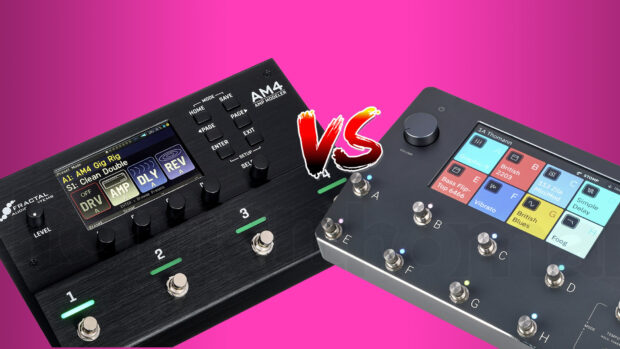
Fractal Audio AM4 Amp Modeller Vs. Neural DSP Quad Cortex: Black Box vs White Box Amp Modelling
Estimated reading time: 10 minutes
- Fractal AM4 offers deep white-box modelling for dynamic realism and extensive tweaking.
- Neural DSP Quad Cortex excels in capturing real sounds with its black-box technology for tonal cloning.
- Both units serve different guitarist needs—live performance versus studio integration.
- Choosing depends largely on workflow preferences and play style.
Table of Contents
- Fractal Audio AM4 Amp Modeller Vs. Neural DSP Quad Cortex: Two Different Visions of Digital Guitar Tone
- What Is White Box Amp Modelling?
- What Is Black Box Amp Modelling?
- Fractal Audio AM4: Compact Fractal Tone with Flagship DNA
- Neural DSP Quad Cortex: Capture Power, Touchscreen Workflow, and Studio Flexibility
- AM4 vs Quad Cortex: Feature Comparison
- Which One Feels More Like a Real Amp?
- Practical Takeaways for Guitar Players
- Final Verdict: Fractal AM4 or Neural DSP Quad Cortex?
Fractal Audio AM4 Amp Modeller Vs. Neural DSP Quad Cortex: Two Different Visions of Digital Guitar Tone
The Fractal Audio AM4 and Neural DSP Quad Cortex are both high-end amp modelers designed for serious guitar players. But they serve slightly different players.
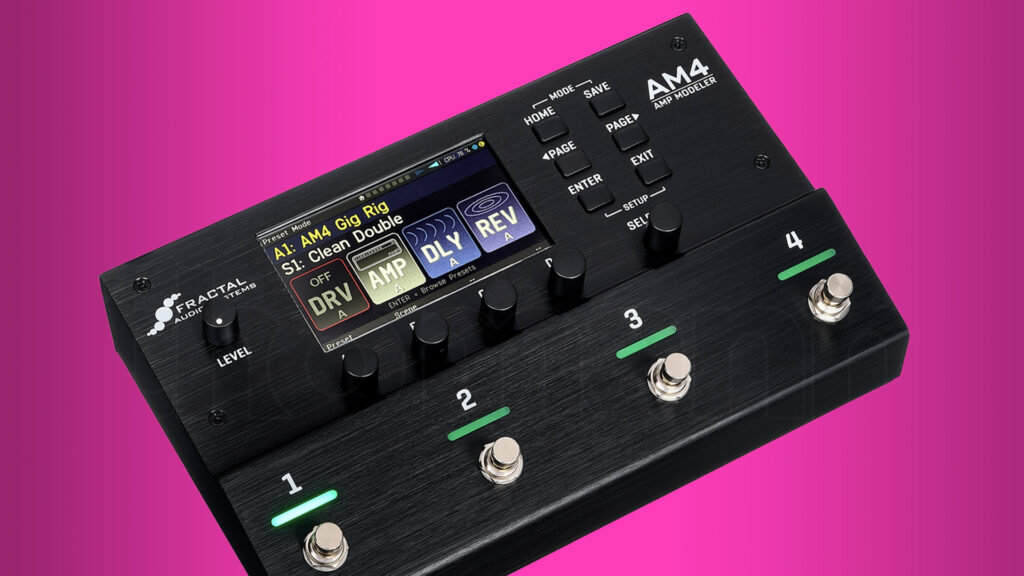
The Fractal AM4 is a compact stompbox-style unit that gives players access to Fractal’s highly respected amp modelling engine in a smaller, more affordable format. According to buyer’s guide coverage, the AM4 runs Fractal’s Cygnus X-3 amp modelling and DynaCab speaker technology, putting it tonally in the same family as the flagship Axe-Fx III, but with fewer simultaneous blocks and a simplified pedalboard-friendly design. Source: Source
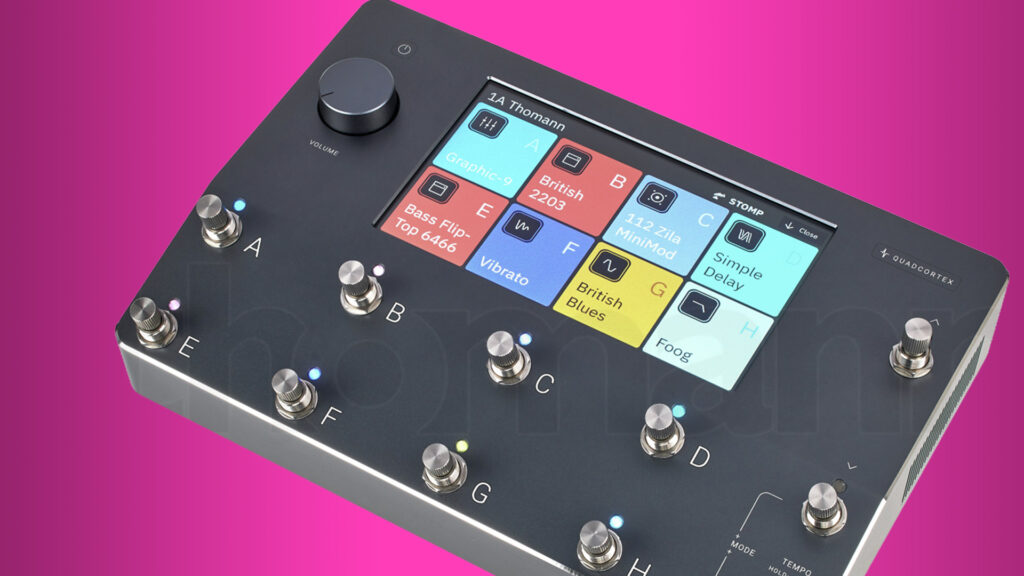
The Neural DSP Quad Cortex is a more expensive, touchscreen-based amp modeller, profiler, and multi-effects unit. Its biggest headline feature is Neural Capture, which uses machine learning to capture the sound and response of real amps, pedals, or entire signal chains. Neural DSP lists the Quad Cortex as having 50+ amp models, 70+ effects, 1000+ IRs, a 7-inch multi-touch display, WiFi, USB audio, MIDI, dual FX loops, and extensive live/studio connectivity. Source
In simple terms:
- Fractal AM4 is for players who want flagship-level amp modelling, deep tone shaping, and realistic tube amp feel in a compact format.
- Quad Cortex is for players who want a powerful touchscreen workflow, amp/pedal captures, community presets, and strong studio integration.
Both sound excellent. The real question is not “which one sounds good?” It is: which approach fits the way you play, record, tweak, and perform?
What Is White Box Amp Modelling?
White-box amp modelling is the approach most closely associated with Fractal Audio.
In a white-box model, the modeller “knows” what is happening inside the amp circuit. Instead of simply listening to an amp and copying the output, the system mathematically recreates individual parts of the circuit: tubes, transformers, tone stacks, power supply behaviour, resistors, capacitors, diodes, and other components.
In Fractal’s case, users and technical discussions often describe the company’s method as component-level modelling, where your guitar signal is processed through a chain of virtual components that behave like their real-world equivalents. Source
That means when you adjust gain, bass, mids, treble, presence, power amp parameters, sag, bias, or speaker interaction, you are not just changing an EQ curve on a static snapshot. You are changing how the virtual circuit behaves.
Why White Box Modelling Matters for Guitar Players
The main advantage is dynamic realism.
A good tube amp does not respond the same way at every volume, gain level, pickup output, or picking strength. It compresses, sags, bites, cleans up, blooms, and breaks up depending on how you play. Fractal’s white-box approach is designed to model those behaviours across a wide range of settings.
Practical benefits include:
- Better cleanup when rolling back your guitar volume
- More realistic pick attack and note bloom
- More natural gain transitions from clean to edge-of-breakup to saturated
- More meaningful amp control changes
- Deep editing of power amp and preamp behaviour
- Consistent tone across different gain and EQ settings
This is why many players describe Fractal units as especially strong in terms of tube-like dynamics, intermodulation distortion, and realistic high-gain “fizz” when amps are pushed. Source
The trade-off? Deep modelling can also mean deep menus. Fractal gear rewards players who enjoy tweaking—or at least players willing to build a few great presets and save them.
What Is Black Box Amp Modelling?
Black-box modelling takes a different route.
Instead of modelling every internal component of an amplifier, a black-box system treats the amp or rig as something to be measured from the outside. It sends test signals into the amp, records what comes out, and trains a model to recreate that input-to-output behaviour.
This is the core idea behind Neural DSP’s Neural Capture on the Quad Cortex. The unit sends signals through a real amp, pedal, or rig, analyzes the response, and creates a capture that can reproduce that sound later. Source Source
This approach is called “black box” because the system does not explicitly know the amp’s circuit topology. It does not know which transformer, tube stage, tone stack, or diode clipping circuit is responsible for the tone. It simply learns how the whole rig responds.
Why Black Box Modelling Matters for Guitar Players
The major advantage is tone cloning.
If you have a favorite tube amp, a perfectly dialed pedalboard, or a studio chain that you never want to lose, the Quad Cortex can capture that specific sound and make it portable. For touring guitarists, session players, and producers, that is incredibly powerful.
Practical benefits include:
- Capture your own real amps and pedals
- Recreate a studio tone for live use
- Download community captures
- Build a fly rig based on your actual gear
- Get convincing results without deep circuit tweaking
- Store many versions of amps at specific sweet spots
The limitation is that captures are typically strongest around the settings used during capture. If you captured an amp with the gain at 6 and mids at 5, the capture may sound fantastic there. But if you want to drastically alter the gain structure, power amp feel, or tone stack behaviour, a white-box model may respond more naturally because it understands the virtual circuit.
That does not mean Neural Capture is bad—far from it. It is one of the most impressive technologies in modern guitar gear. But it is best thought of as capturing a great tone, rather than fully recreating every possible behaviour of an amplifier circuit.
Fractal Audio AM4: Compact Fractal Tone with Flagship DNA
The Fractal AM4 is exciting because it brings Fractal’s high-end modelling into a smaller, more affordable format. According to current buyer’s guide information, the AM4 was released as a compact stompbox-style Fractal unit and uses the same core Cygnus X-3 amp modelling and DynaCab speaker technology found in larger Fractal systems. Source Source
Reported feature highlights include:
- 240+ amp models
- 45+ DynaCabs
- 325+ effects
- Around 75+ drive pedal models
- Four effect blocks per preset
- Compact pedalboard-friendly format
- Axe-Fx-level amp tone in a smaller package
The biggest selling point is clear: Fractal amp tone without buying a larger Fractal floorboard or rack unit.
AM4 Strengths
The AM4 is especially appealing if your signal chain is relatively focused. For example:
- Drive → amp → cab → delay
- Amp → cab → reverb → boost
- Compressor → amp → cab → modulation
- Amp → cab → EQ → delay
If you mainly need one amp, one cab, and a couple of carefully chosen effects, the AM4 offers serious value. It is particularly strong for guitarists who already have a pedalboard and want to add Fractal amp and cab modelling as the centerpiece.
Another strength is amp flexibility. Because Fractal uses white-box modelling, you can take one amp model and reshape it significantly. You can push the virtual power amp, adjust sag, change speaker behaviour, refine gain structure, and fine-tune feel in a way that goes beyond simply loading a snapshot.
AM4 Limitations
The biggest limitation is the four-block-per-preset structure. This is not a unit for players who want huge dual-amp rigs, multiple parallel paths, stereo wet/dry/wet setups, or five different ambient delays stacked together.
Compared to larger Fractal units like the Axe-Fx III, FM9, or FM3, the AM4 is intentionally more compact and streamlined. Reviews also note that the smaller display means deeper editing is easier with a desktop editor than directly on the unit. Source Source
For many players, that is a fair trade. For power users, it may feel restrictive.
Neural DSP Quad Cortex: Capture Power, Touchscreen Workflow, and Studio Flexibility
The Neural DSP Quad Cortex is one of the most talked-about amp modellers of the last several years, and for good reason. It combines amp modelling, effects, IR loading, Neural Capture, USB audio, WiFi, and a modern touchscreen interface in one compact floor unit.
According to Neural DSP’s official product information, the Quad Cortex includes:
- 50+ amp models
- 70+ effects
- 1000+ IRs
- AI-powered Neural Capture
- 7-inch multi-touch display
- Stainless steel footswitch-knobs
- WiFi
- Anodized aluminum chassis
- 2 GHz quad-core SHARC architecture
- Dual combo inputs
- Dual FX loops
- 1/4-inch and XLR outputs
- Headphone output
- MIDI I/O
- Dual expression pedal jacks
- USB audio interface
Quad Cortex Strengths
The biggest reason to buy a Quad Cortex is Neural Capture.
If you own a great tube amp, a boutique overdrive, a favorite fuzz, or a complete studio chain, the Quad Cortex lets you capture it and take it anywhere. That is a huge advantage for players who do not just want “a great Marshall-style sound” or “a nice clean Fender-style tone”—they want their amp, at their settings.
The second major strength is the user interface. The large touchscreen and drag-and-drop workflow make the Quad Cortex feel modern and fast. For players used to smartphones and tablets, editing signal chains on a touchscreen can feel much more natural than menu diving.
The third strength is studio integration. With USB audio, WiFi, cloud backup, shared captures, and strong I/O, the Quad Cortex works well as a home recording hub, live rig, or fly rig.
Quad Cortex Limitations
The Quad Cortex has fewer native amp models than Fractal’s ecosystem. That is not necessarily a problem, because the Quad Cortex leans heavily on captures. But if you want a massive built-in library of amp models ready to tweak, Fractal has the advantage.
Some users comparing Fractal units with the Quad Cortex also report that Fractal feels more dynamically reactive, while the Quad Cortex can feel smoother or slightly less aggressive in certain high-gain and edge-of-breakup contexts. Source Source
There are also discussions around complex routing and latency. Some buyer’s guides and users suggest that certain high-end Fractal units offer deeper routing options and, in some configurations, lower latency than Quad Cortex. Source
Still, the Quad Cortex remains one of the strongest choices for players who value captures, fast editing, and studio convenience.
AM4 vs Quad Cortex: Feature Comparison
| Feature | Fractal Audio AM4 | Neural DSP Quad Cortex |
|---|---|---|
| Core approach | White-box circuit modelling | Hybrid modelling + black-box Neural Capture |
| Amp models | Approx. 240+ | 50+ amp models plus captures |
| Speaker/cab tech | 45+ DynaCabs, IR support | 1000+ IRs, cab tools, full-rig captures |
| Effects | Approx. 325+ effects, 75+ drives | 70+ effects |
| Preset structure | 4 blocks per preset | Flexible grid-based routing |
| Interface | Compact screen, hardware controls, desktop editor recommended | 7-inch touchscreen, drag-and-drop workflow |
| Best feature | Fractal amp realism in compact format | Neural Capture and modern workflow |
| Best for | Live players, pedalboards, amp realism, focused rigs | Studio players, capture users, flexible live/studio setups |
| Price position | Lower than Quad Cortex in many markets | Higher-end price tier |
Which One Feels More Like a Real Amp?
This is where the debate gets interesting.
Many players who prefer Fractal describe its models as more “alive,” “dirty,” “reactive,” or “tube-like,” especially when adjusting guitar volume or digging in with the pick. That makes sense given Fractal’s white-box modelling approach. The unit is not just reproducing a captured response; it is simulating how the virtual amp circuit should behave across many different conditions.
Quad Cortex fans often respond with a different argument: Neural Capture can sound almost exactly like a specific amp at a specific setting. In a mix, that can be all you need. If your captured amp sound is already perfect, you may not care whether the unit is modelling every internal circuit interaction.
So the practical answer is:
- For dynamic feel and tweakability: Fractal AM4 has the edge.
- For cloning a specific real-world tone: Quad Cortex has the edge.
- For final recorded tone in a mix: both can sound professional.
Practical Takeaways for Guitar Players
Choose the Fractal AM4 if:
- You want the feel and response of Fractal’s white-box amp modelling.
- You mostly use simple signal chains.
- You already have external pedals and need a world-class amp/cab platform.
- You want lots of amp models and effects in a compact unit.
- You care more about amp behaviour than capturing your own gear.
- You want strong value compared with larger flagship modelers.
A great AM4 setup might be: guitar → favorite drive pedals → AM4 amp/cab/delay/reverb → FRFR speaker, PA, or recording interface.
Choose the Neural DSP Quad Cortex if:
- You want to capture your own amps, pedals, or complete rigs.
- You prefer touchscreen editing.
- You want strong recording and USB audio features.
- You like downloading and sharing community captures.
- You need a flexible all-in-one live and studio hub.
- You value fast workflow over deep component-level tweaking.
A great Quad Cortex setup might be: guitar → Quad Cortex with captured amp/pedal chain → XLR to front of house and USB to your recording computer.
If You Play Live
For straightforward live rigs, the AM4 is incredibly appealing because it gives you elite amp tones in a smaller footprint. But if you need more flexible routing, multiple input/output paths, captures, or a full all-in-one floorboard, the Quad Cortex may be more practical.
If You Record at Home
The Quad Cortex has a strong advantage as a recording hub because of its USB audio, touchscreen workflow, WiFi, and capture ecosystem. However, the AM4 can still produce exceptional recorded tones if you already have an interface and prefer Fractal’s amp feel.
If You Love Tweaking
Go Fractal. The AM4 may have fewer blocks than larger Fractal units, but the amp models themselves are deep. If you enjoy refining sag, bias, speaker interaction, EQ behaviour, and gain structure, Fractal’s white-box approach is extremely rewarding.
If You Hate Tweaking
Go Quad Cortex. Capture or download a great sound, drop it into a preset, add effects, and play. For many guitarists, that workflow is faster and more inspiring.
Final Verdict: Fractal AM4 or Neural DSP Quad Cortex?
The Fractal Audio AM4 vs Neural DSP Quad Cortex decision is really about philosophy.
The Fractal AM4 is the better choice if you want highly realistic, deeply tweakable amp models that respond like virtual circuits. Its white-box modelling approach gives you dynamic feel, broad control, and a huge library of amps and effects in a compact format. The trade-off is fewer simultaneous blocks and a less luxurious on-device interface.
The Neural DSP Quad Cortex is the better choice if you want to capture real rigs, use a modern touchscreen, integrate with a studio setup, and access a world of shared tones. Its black-box Neural Capture technology is incredibly powerful for reproducing specific sounds. The trade-off is that captures may not respond to extreme parameter changes as organically as a fully modelled circuit.
Neither unit is “wrong.” Both are professional tools capable of excellent guitar tones.
If your dream is to have a compact box that behaves like a huge collection of real amps, buy the Fractal AM4.
If your dream is to take your exact favorite amp and pedal tones anywhere, buy the Neural DSP Quad Cortex.
For today’s guitar players, that is the real win: whether you prefer white-box modelling or black-box capture, modern amp modellers have reached a point where great tone is no longer the question. The question is which workflow inspires you to play more.
FAQ
- What is the main difference between the Fractal AM4 and Quad Cortex?
- The Fractal AM4 uses white-box modelling for dynamic realism, while the Quad Cortex employs black-box technology for tone capturing.
- Can I use the AM4 for live performances?
- Yes, the Fractal AM4 is ideal for live players who need compact amp modelling and effects.
- Is the Quad Cortex suitable for studio recording?
- Absolutely, the Quad Cortex offers excellent studio integration and USB audio features.
- Which one is better for versatile signal chains?
- The Quad Cortex provides flexible routing options, which can accommodate complex signal chains.
- Are both units capable of professional sound quality?
- Yes, both the Fractal AM4 and Neural DSP Quad Cortex deliver professional-grade tones suitable for recording and live performance.
Please note: This article was created with the help of AI. It may therefore contain errors or outdated information. We provide no guarantee for the accuracy or completeness of the details given here. Please verify specifications and prices with the manufacturer or retailer before making a purchase decision.
Affiliate disclosure: This article contains affiliate links. If you buy a product through one of these links, we receive a small commission. The price stays exactly the same for you.