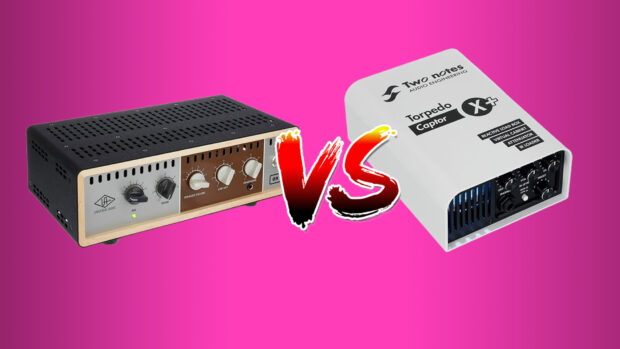
Universal Audio OX Box vs Two Notes for Home Recording Real Tube Amps
Estimated Reading Time: 7 minutes
- Compare the Universal Audio OX and Two Notes Captor X for home recording.
- Understand key differences in features, setup, and sound quality.
- Get practical buying advice for optimal tube amp recording.
Table of Contents
- What Are They Actually For?
- Power Handling and Impedance: The First Practical Difference
- Cab Simulation: Dynamic Speaker Modeling vs Virtual Cabinets
- Effects and Processing: Studio Polish or Practical Tools?
- Attenuation and Playing Feel at Home
- Workflow: Fast Studio Rig vs Flexible Tone Lab
- Outputs and Studio Integration
- Price and Value
- Recommended Products from Thomann
- Which One Should You Buy?
- Final Verdict
What Are They Actually For?
At their core, both the Universal Audio OX and Two Notes Torpedo Captor X are reactive load boxes designed for guitarists who want to use real tube amps in modern recording environments.
A tube amp normally needs to “see” a speaker load. If you disconnect the speaker and run the amp without a proper load, you can damage the output transformer. A reactive load box safely replaces or sits between the amp and speaker cabinet, allowing you to push the amp harder while controlling the actual acoustic volume.
Both devices let you:
- Record a real tube amp silently into an audio interface or DAW
- Play through headphones or studio monitors
- Use virtual cabinets, microphones, and room sounds
- Attenuate your real speaker cabinet for lower-volume playing
- Capture more consistent guitar tones than traditional mic placement in an untreated room
For home recording, that’s a massive advantage. You can get power amp saturation, edge-of-breakup feel, and real amp dynamics without needing a loud 4×12 cabinet in your bedroom.
Power Handling and Impedance: The First Practical Difference
Before talking about tone, you need to check compatibility. This is where the OX and Captor X differ significantly.
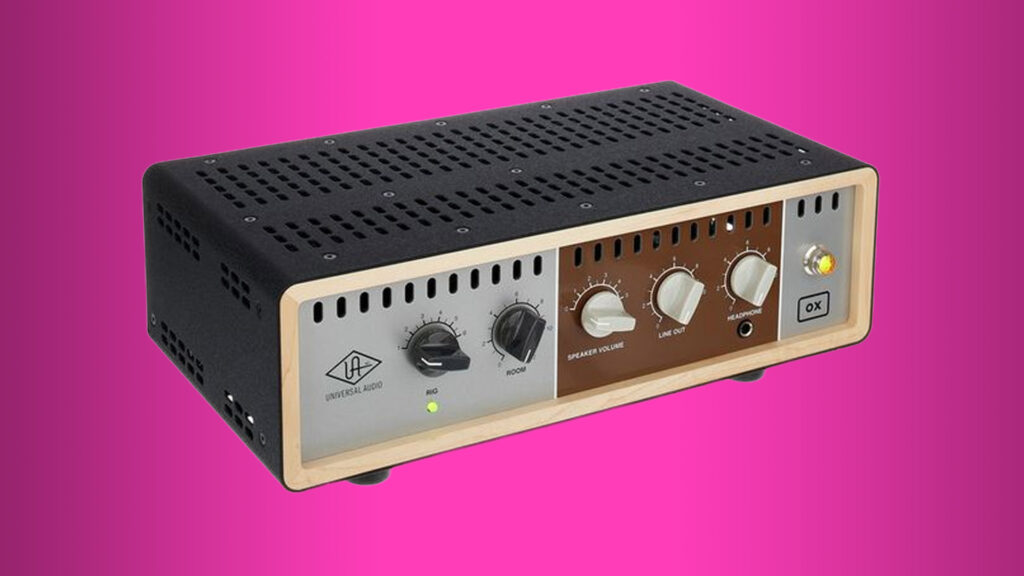
The Universal Audio OX handles up to 150 watts RMS and offers selectable 4, 8, and 16 ohm impedance. That makes it highly flexible if you own several tube amps with different speaker outputs. A vintage Fender combo, a Marshall-style head, and a higher-powered amp can all be easier to integrate with one OX, provided you set the impedance correctly.
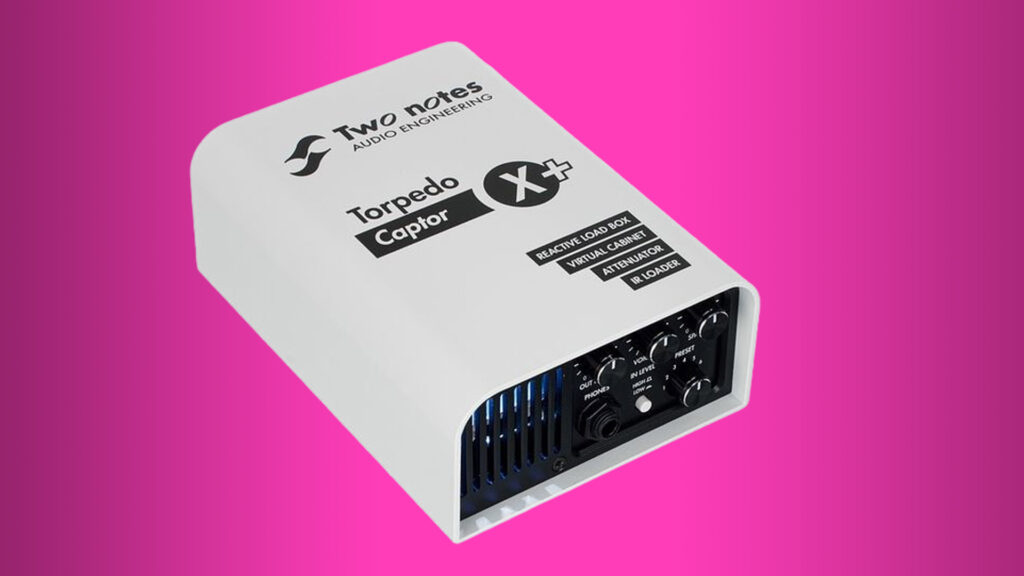
The Two Notes Torpedo Captor X handles up to 100 watts RMS and is sold in fixed-impedance versions, commonly 8 ohm or 16 ohm. That is perfectly fine for many popular tube amps, especially 15W, 20W, 30W, and 50W models. But if you have multiple amps with different impedance requirements, you’ll need to buy the right version or use amps that can be matched safely.
For home recording, this matters more than many guitarists realize. If you only record one 8-ohm amp, the Captor X is easy. If your amp collection includes 4, 8, and 16-ohm outputs, the OX is more convenient.
Practical takeaway: Before buying either unit, check your amp’s speaker output impedance and wattage. Do not guess. Match the load correctly every time.
Cab Simulation: Dynamic Speaker Modeling vs Virtual Cabinets
This is the heart of the debate.
The Universal Audio OX uses UA’s dynamic speaker modeling rather than simple impulse response loading. It is designed to emulate not only the frequency response of cabinets and microphones, but also speaker breakup, cone behavior, cone cry, off-axis character, room sound, and the feel of a miked cabinet in a studio.
In user reviews and forum discussions, including UA Forum and Gearspace-style conversations, OX owners often describe the sound as “3D,” “alive,” and “like a real mic’d cab in a studio room.” One user report noted that the OX felt “99% as responsive as playing through an amp on the edge of breakup” and even revealed cone cry on higher bends.
The stock OX cabinet options are also highly praised. They include classic-style rigs inspired by:
- Marshall Greenback cabinets
- Tweed-era combos
- Vox-style 2×12 cabinets
- Bassman-style 4×10 setups
- Small Fender combo sounds
- Divided by 13-style 2×12 tones
Instead of giving you endless cabinet files, the OX gives you curated “RIGs”: cab, mic, room, and processing chains designed to sound finished quickly.
The Two Notes Torpedo Captor X, meanwhile, uses Two Notes’ virtual cabinet ecosystem. It includes 32 modeled cabinets, multiple microphone choices and positions, room simulations, dual-mic setups, and deep routing options. It also works with the Wall of Sound plugin, allowing you to adjust cabinet and microphone choices after recording if you track the right signal.
That flexibility is a huge advantage if you like to build guitar tones inside your DAW. Want a tighter modern rhythm tone? A wider stereo ambient setup? A wet/dry patch? A different mic blend after tracking? The Captor X is built for that.
In Rhett Shull’s comparison, he concluded that the OX sounded better overall, especially in the cabinet, mic, and room realism department, but he also said it was not twice as good, even though it can cost much more. That is an important point: the Captor X gets very close and offers excellent value.
Bottom line: The OX generally wins for “plug in and immediately sounds like a finished record.” The Captor X wins for flexibility, variety, and post-recording tone shaping.
Effects and Processing: Studio Polish or Practical Tools?
The OX includes onboard processing that feels very much like part of Universal Audio’s studio heritage. You get EQ, compression, delay, reverb, room controls, and speaker breakup behavior integrated into the rig. Many users compare the quality to UA’s plugin ecosystem, which includes Apollo interfaces and UAD processing.
That makes the OX excellent if you want to track a finished sound. You can set up a rig, add tasteful compression and room, and record a guitar part that needs little more than level balancing in the mix.
The Captor X includes useful built-in effects too:
- Stereo doubler
- Stereo reverb
- Aural enhancer
- Voicing controls
- Noise gate
- Presets
- Stereo routing options
However, the general user sentiment is that the Captor X effects are more functional than luxurious. They are good enough for monitoring and many recordings, but if you are chasing polished studio processing, you may still add EQ, compression, delay, and reverb in your DAW.
Practical takeaway: If you want a self-contained box that delivers finished guitar tracks quickly, the OX is stronger. If you already use DAW plugins and like mixing, the Captor X gives you plenty to work with.
Attenuation and Playing Feel at Home
Both units can work as silent loads and as attenuators, but their attenuation systems are different.
The Universal Audio OX has a 5-way attenuation switch, giving you more gradual control between full speaker output and lower-volume settings. This is useful if you still want to use your real cabinet but need to reduce volume to home-friendly levels. Like every attenuator, the tone and feel can change at extreme attenuation, but the OX is widely regarded as one of the better-feeling solutions.
The Two Notes Torpedo Captor X has a 3-way attenuation switch: 0 dB, -20 dB, and -38 dB. This is less granular but still very practical. For many players, -20 dB is useful for taking the edge off a loud amp, while -38 dB is closer to very quiet practice territory.
For silent recording into monitors or headphones, both are excellent. The bigger difference is when you want to keep a real speaker cabinet connected and find that perfect “quiet but still moving air” volume. The OX gives you finer control.
Practical takeaway: For silent tracking, both work well. For nuanced real-cab attenuation, the OX has the advantage.
Workflow: Fast Studio Rig vs Flexible Tone Lab
The OX workflow is designed to be simple:
- Connect amp speaker output to the OX
- Match impedance
- Connect line out or digital out to your interface
- Open the OX app over Wi-Fi
- Choose a rig and record
Many OX users love that it “just works.” The default rigs are strong, and the box is clearly aimed at players who want great tone without scrolling through hundreds of options.
The tradeoff is that deeper control requires the OX app and Wi-Fi. For most home studios, that’s fine. But some users prefer USB or hardware-based editing.
The Captor X is more compact and can be controlled via USB, mobile app, or MIDI. It offers 128 presets, stereo XLR outputs, wet/dry possibilities, dual mono options, and deeper integration with Two Notes software. Once you build your favorite presets, it can be very fast. But the initial tone-building process can be more involved.
If you enjoy experimenting with virtual mics, room size, stereo spread, and cabinet combinations, the Captor X is inspiring. If you just want to play guitar and stop thinking about menus, the OX feels more immediate.
Outputs and Studio Integration
The OX offers multiple line outputs and S/PDIF digital out, which can be useful if your audio interface supports digital input. That lets you keep the signal path clean and avoid additional conversion.
The Captor X offers two XLR outputs, which can run stereo, dual mono, or wet/dry configurations. This is excellent for modern home recording setups and makes it easy to send directly into an interface, mixer, or live console.
Both units work well with audio interfaces, studio monitors, and headphones. If you already use a Universal Audio Apollo interface, the OX feels like a natural extension of the UA ecosystem. If you like software-based cabinet control and preset sharing, Two Notes has a strong guitar-focused ecosystem.
Price and Value
The Universal Audio OX is the premium option. It typically costs significantly more than the Captor X. You are paying for premium hardware, polished software, excellent onboard effects, dynamic speaker modeling, and a very refined user experience.
The Two Notes Torpedo Captor X is often around half, or a bit more than half, the price of the OX depending on sales and region. That makes it one of the strongest value choices for players who want real tube amp recording at home without spending top-tier money.
The key point from reviewers like Rhett Shull is that the OX may sound better, but not necessarily enough better for every player to justify the price difference. If your budget allows and you want the most finished experience, the OX is fantastic. If you want professional results and maximum flexibility for less money, the Captor X is hard to beat.
Recommended Products
If you’re building a home recording setup around real tube amps, these are the key products to consider from Thomann:
Universal Audio OX Amp Top Box
Recommended for players who want premium sound, selectable impedance, excellent onboard processing, and fast record-ready tones.
Best for:
- Multiple amps with different impedances
- Classic rock, blues, country, indie, and vintage-style studio tones
- Players who want minimal tweaking
- Home studios already using Universal Audio gear
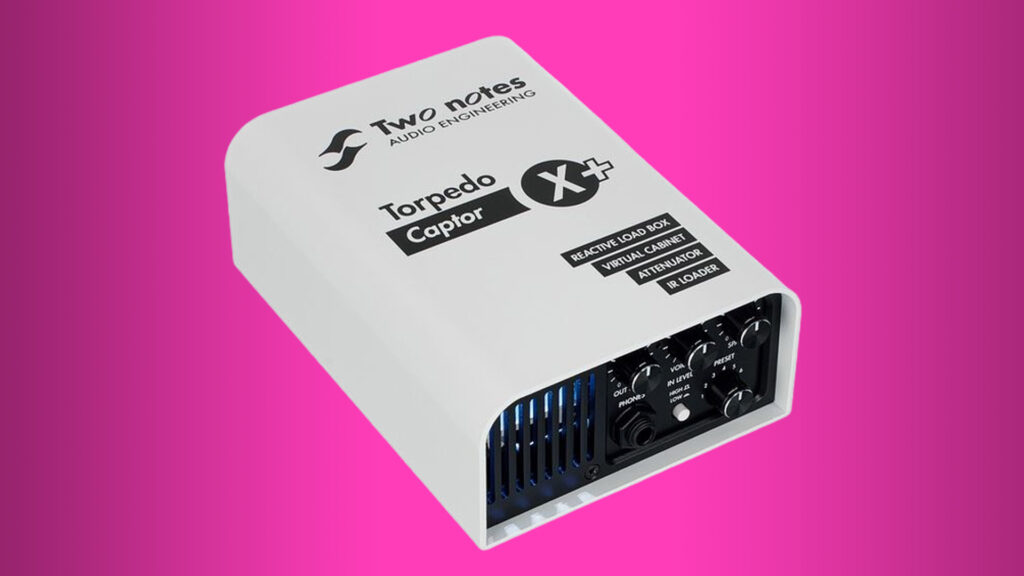
Two Notes Torpedo Captor X 8 Ohm
Recommended for players with 8-ohm amps who want excellent direct recording, stereo outputs, strong cab simulation, and great value.
Best for:
- One main 8-ohm amp
- Home recording on a tighter budget
- Guitarists who like tweaking cab and mic settings
- Stereo recording and wet/dry setups
Two Notes Torpedo Captor X 16 Ohm
Recommended if your amp requires a 16-ohm load.
Best for:
- 16-ohm heads and cabinets
- Players who know their amp impedance requirements
- Compact home studio setups
Audio Interface Recommendation
To get the best from either load box, use a quality audio interface with clean line inputs. If you are already interested in UA gear, an Apollo interface pairs naturally with the OX.
Check out: Thomann Music UA interfaces
For budget-conscious setups, Focusrite Scarlett interfaces are popular and reliable.
Check out: Thomann Focusrite Scarlett Intefaces
Which One Should You Buy?
Choose the Universal Audio OX if you:
- Own multiple amps with different impedance outputs
- Need 4, 8, and 16-ohm flexibility
- Want the most realistic “mic’d cab in a room” feel
- Prefer curated, polished, mix-ready sounds
- Want high-quality onboard EQ, compression, reverb, and delay
- Don’t mind paying more for convenience and premium tone
Choose the Two Notes Torpedo Captor X if you:
- Have an amp that matches the Captor X impedance version
- Want excellent tones at a lower price
- Like experimenting with cabs, mics, rooms, and presets
- Want stereo XLR outputs, MIDI, and flexible routing
- Are comfortable doing extra processing in your DAW
- Value compact size and portability
For most home recordists, the Captor X is the smarter value buy. It sounds very good, offers deep control, and costs much less. But for players who want the least friction and the most polished tones straight away, the OX remains one of the best reactive load and cabinet modeling solutions available.
Final Verdict
The Universal Audio OX Box vs Two Notes for home recording real tube amps debate is not really about good versus bad. Both are capable of producing professional guitar tracks at home. The real decision is about workflow and priorities.
The OX is the premium, inspiring, record-ready solution. It feels like plugging your amp into a high-end studio chain. The cabinet and room modeling are often described as more three-dimensional and realistic, and the onboard processing is excellent.
The Two Notes Torpedo Captor X is the flexible, compact, high-value solution. It gives you strong cab tones, stereo routing, lots of presets, Wall of Sound integration, and enough tweakability to cover almost any genre.
If you want the fastest path to classic, finished tube amp tones at home, buy the OX. If you want the best balance of price, flexibility, and professional recording quality, buy the Captor X.
Either way, the biggest win is this: you can finally record your real tube amp at home without fighting volume, microphones, bad room acoustics, or angry neighbors.
Note: This blog post may contain errors. Please check all specifications with the retailer before making a purchase.